
WGSN News

In the past few weeks, WGSN members have been very active in public presence. On that occasion, we had created some viewgraphs on the activity of the working group in the past decade – by chance also realising that we forgot celebrating the tenth birthday.
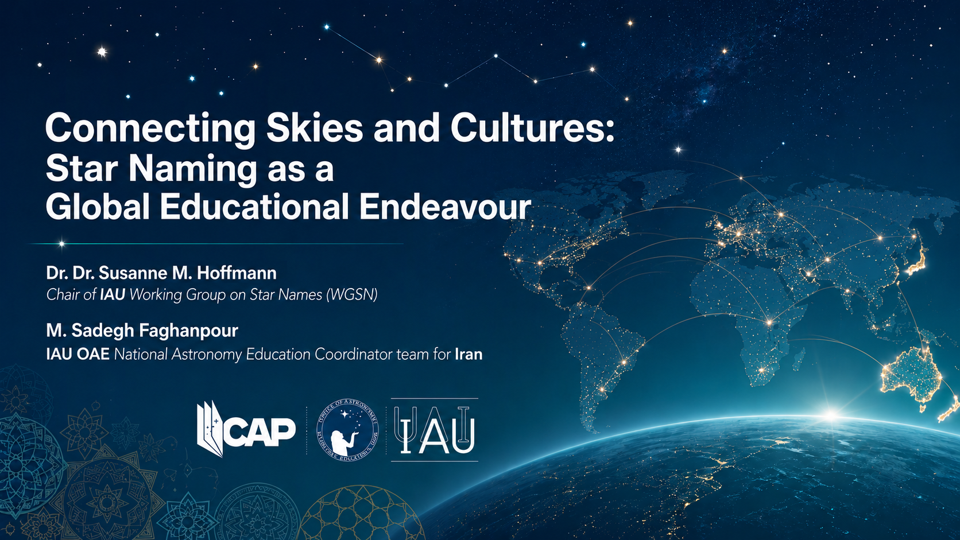
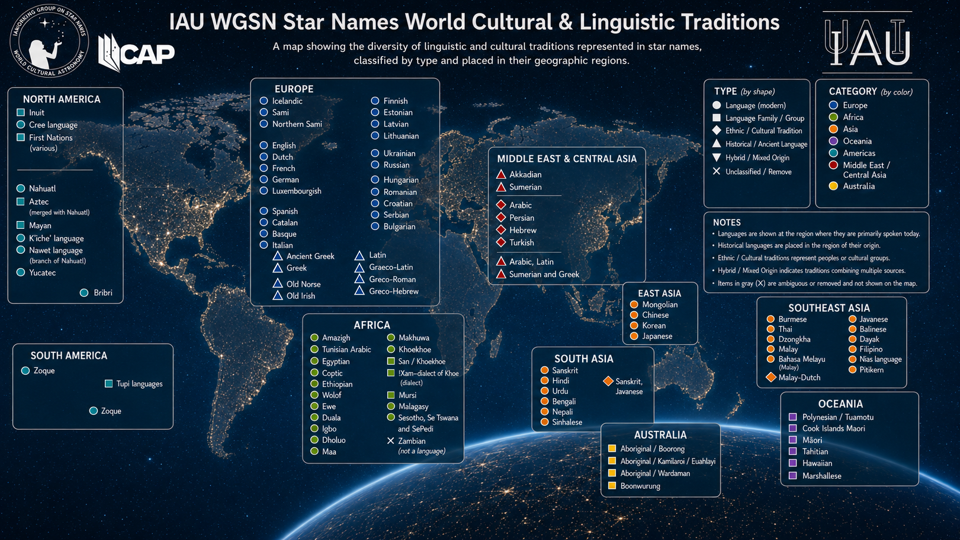
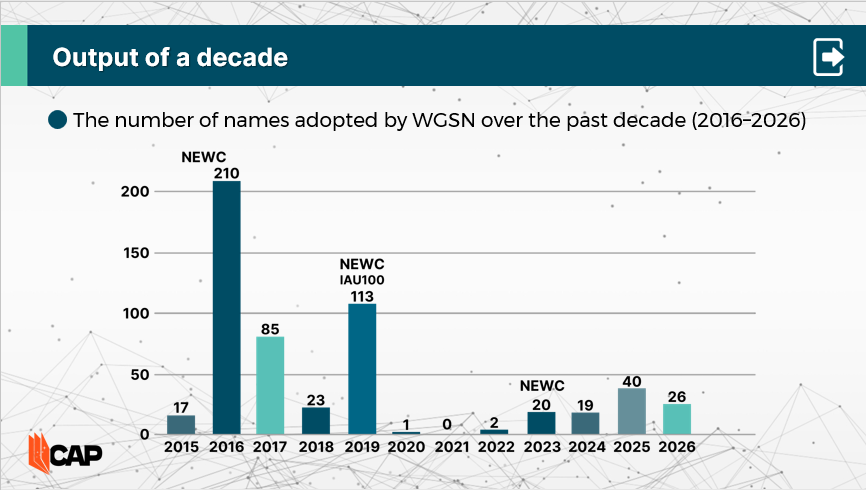
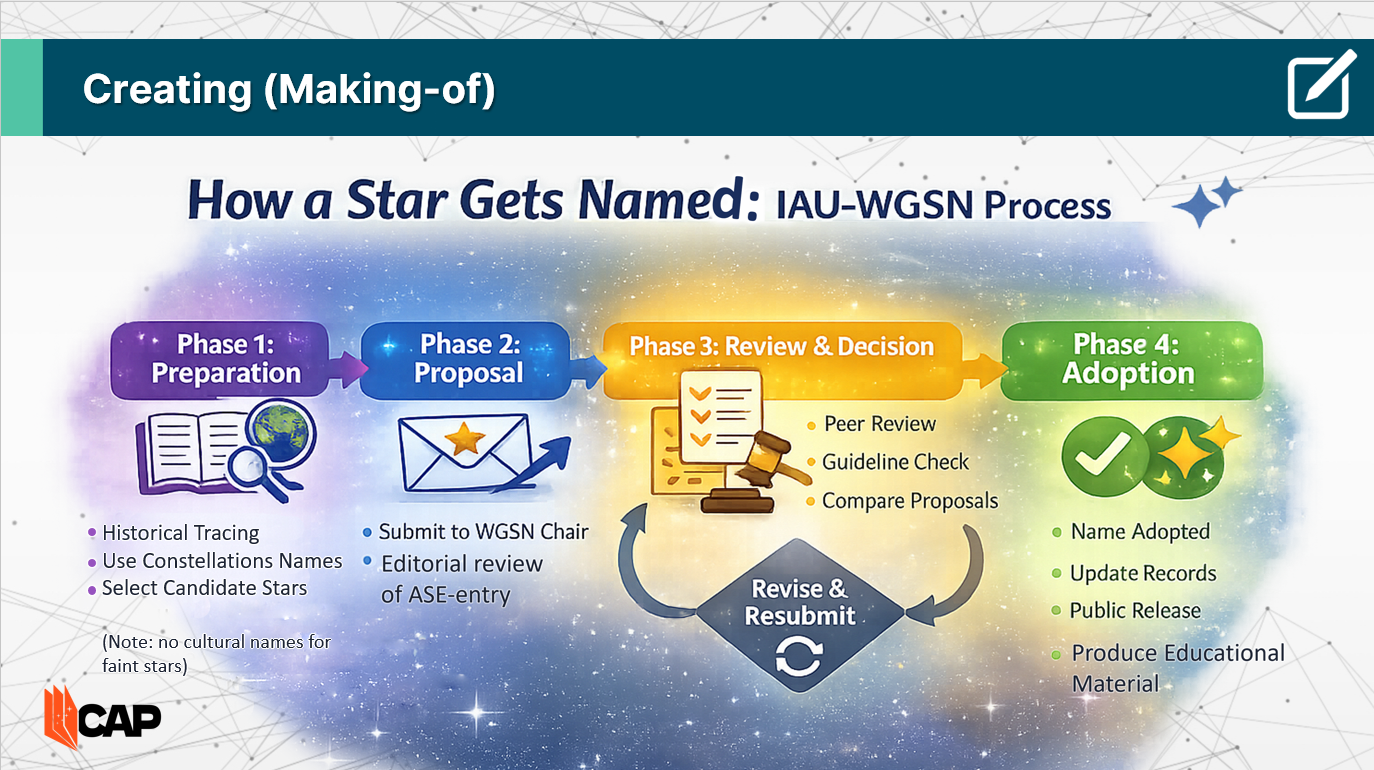
ASROC – Zhubei, Taiwan
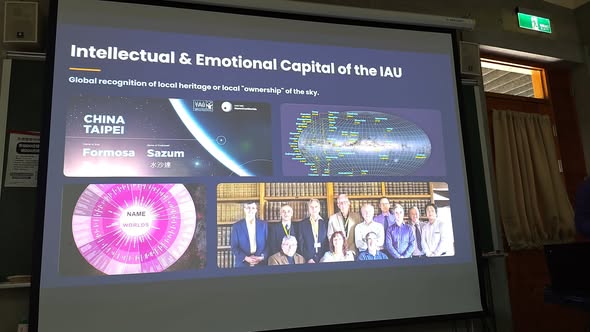
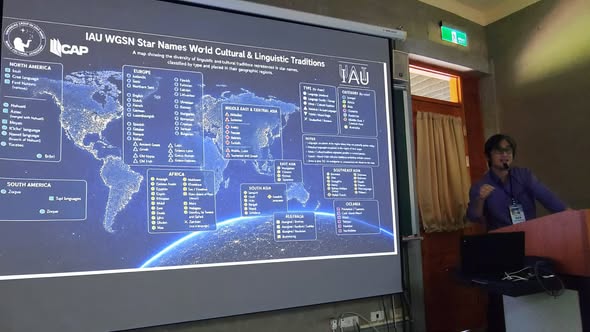
Cheung Sze-leung work on astronomy outreach and star naming at the ASROC 2026 Annual Meeting in Zhubei, Taiwan. He posted on Facebook and Instagram with our Social Media Agent’s amazing viewgraphs on our results:
https://www.instagram.com/p/DZDBAj9k3kW/?utm_source=ig_web_copy_link&igsh=MzRlODBiNWFlZA==
https://www.facebook.com/share/p/1B6BwGkNSE/”
He wrote:
“Preparing for this presentation gave me a moment to reflect on just how far we’ve come. The incredible output of the Working Group Star Names is the result of a 10-year journey that began in 2015. It’s been an honor to witness this process and see a modern era of star naming begin—one that recognizes not just traditional Greco-Latin roots, but a rich geographical and cultural diversity. It is endlessly fascinating to see how different cultures connect their identities and knowledge to the night sky.
When the next generation looks at the stars, they won’t just learn the stories and heroes of Greek mythology; they will also discover the folklore, history, and traditions from all around the Earth. The journey of our current civilization will become the legends of tomorrow.
Hundreds or thousands of years from now, when our current conflicts are long forgotten, our history and culture will still be remembered by the stars. I am so proud to contribute to this enduring piece of human legacy in the cosmos.”
CAP 2026 (Yerevan, Armenia 2026)
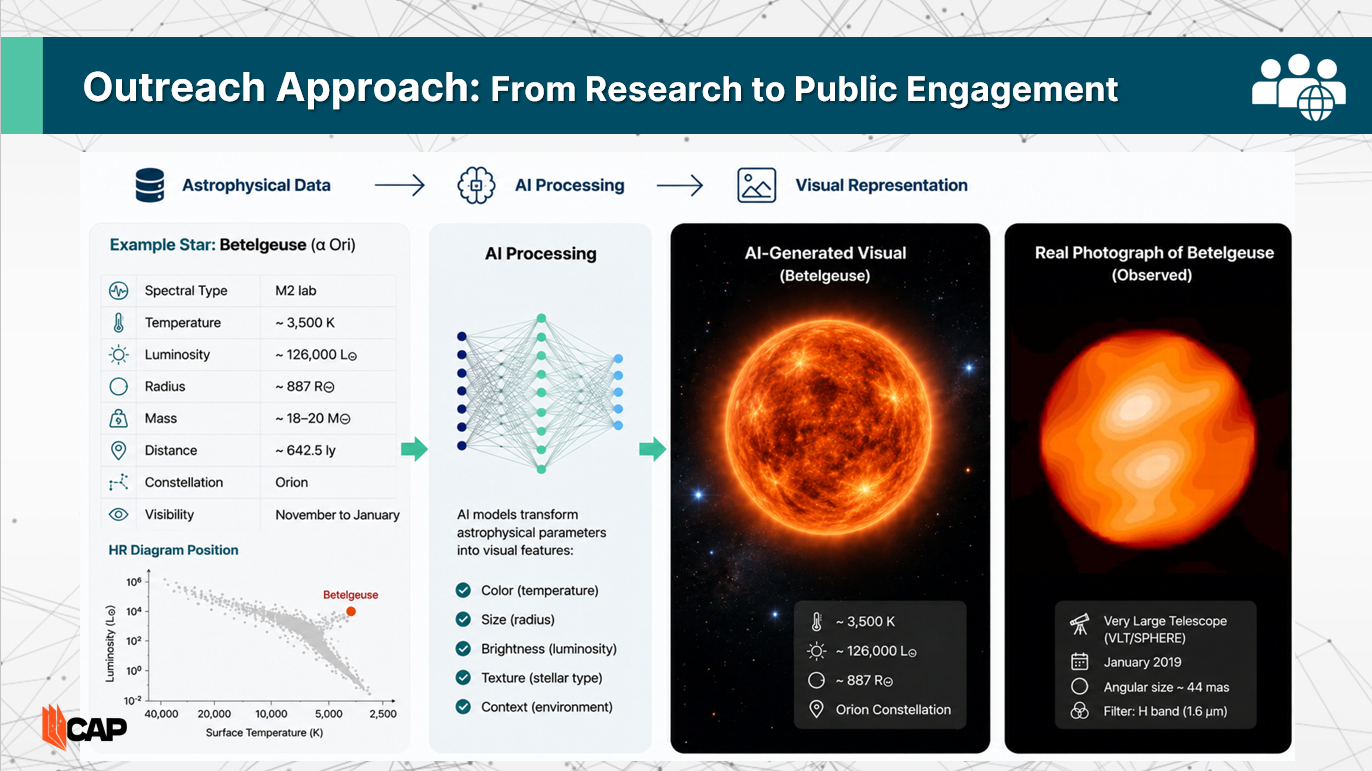
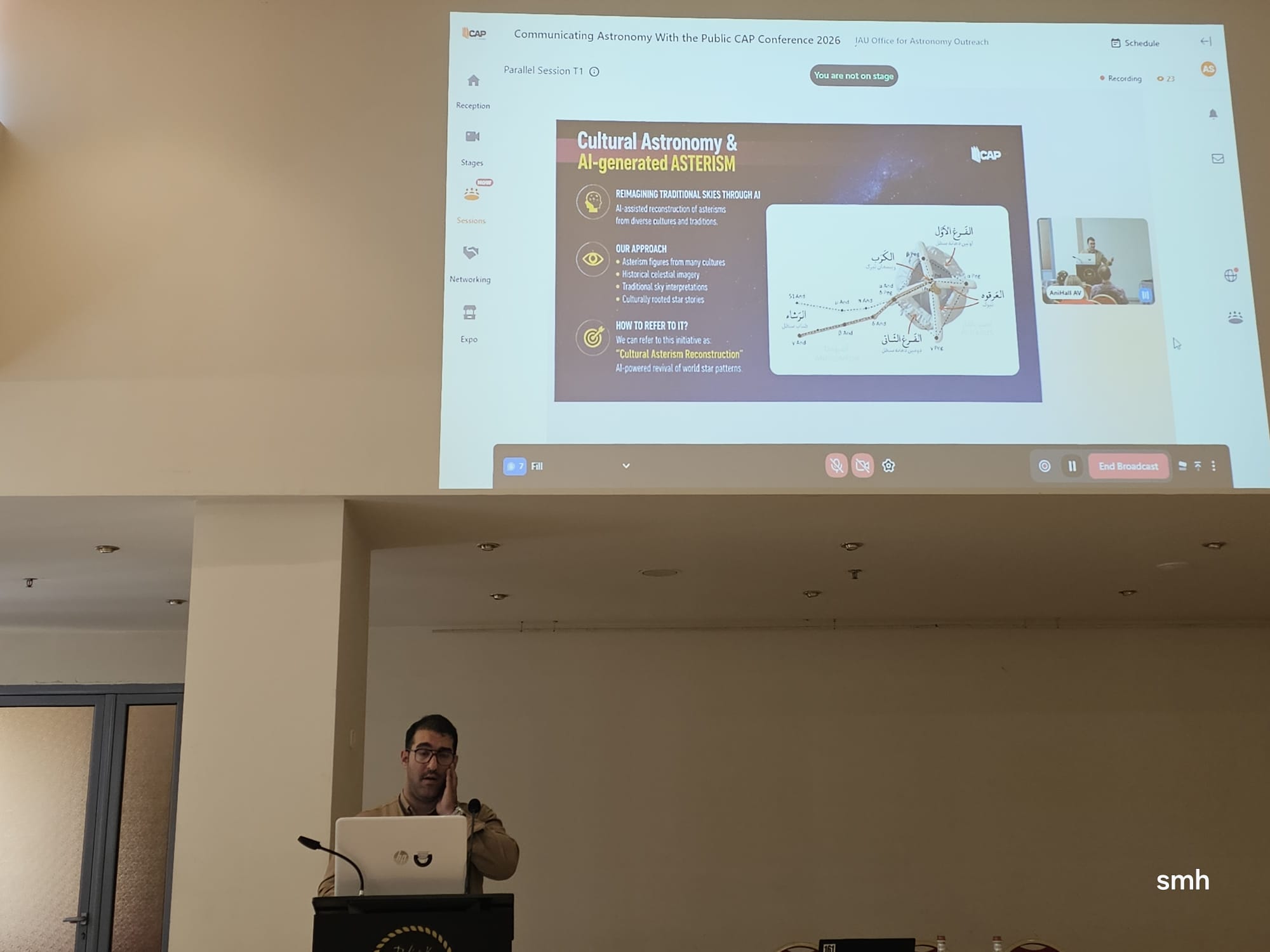
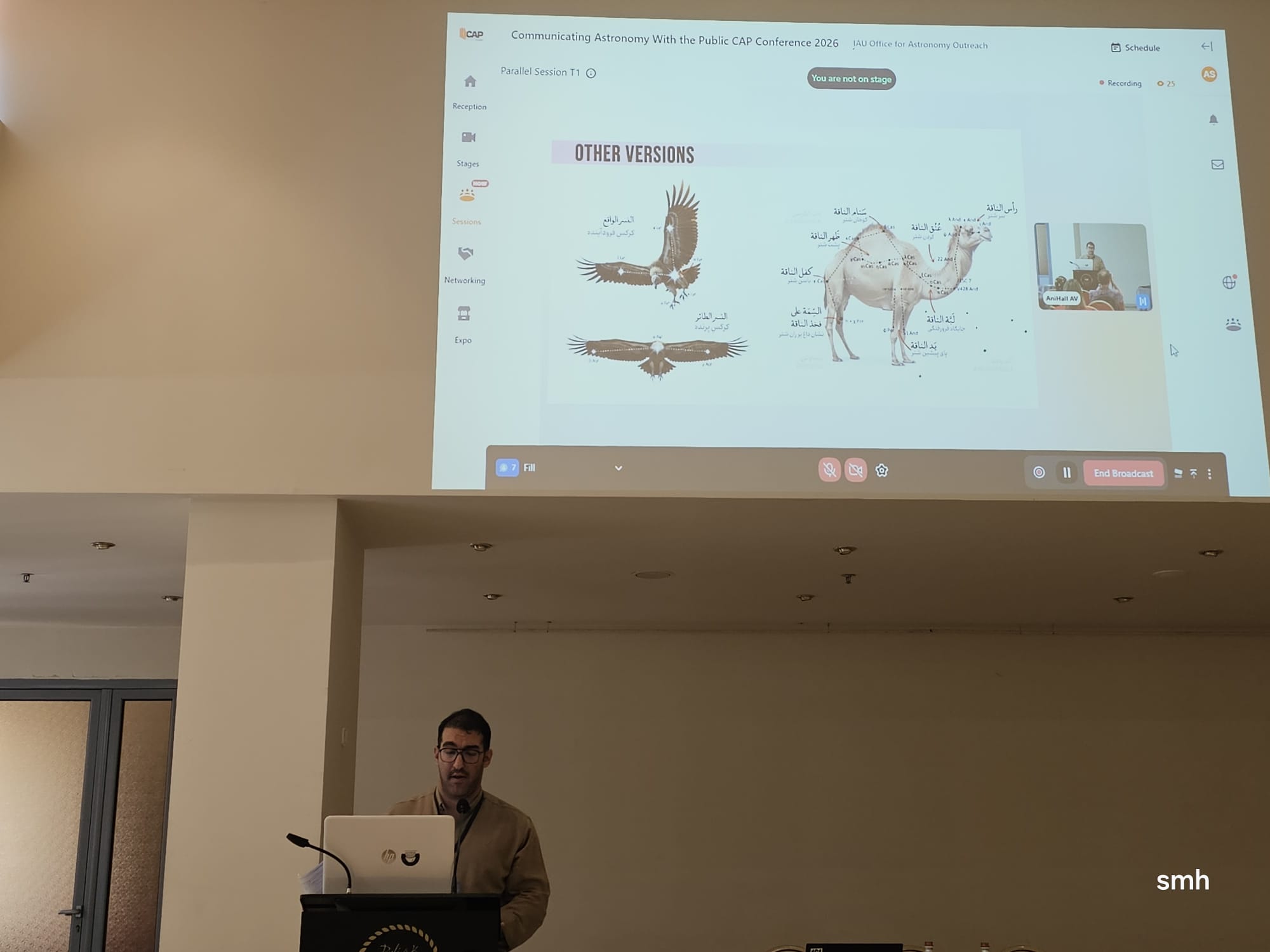
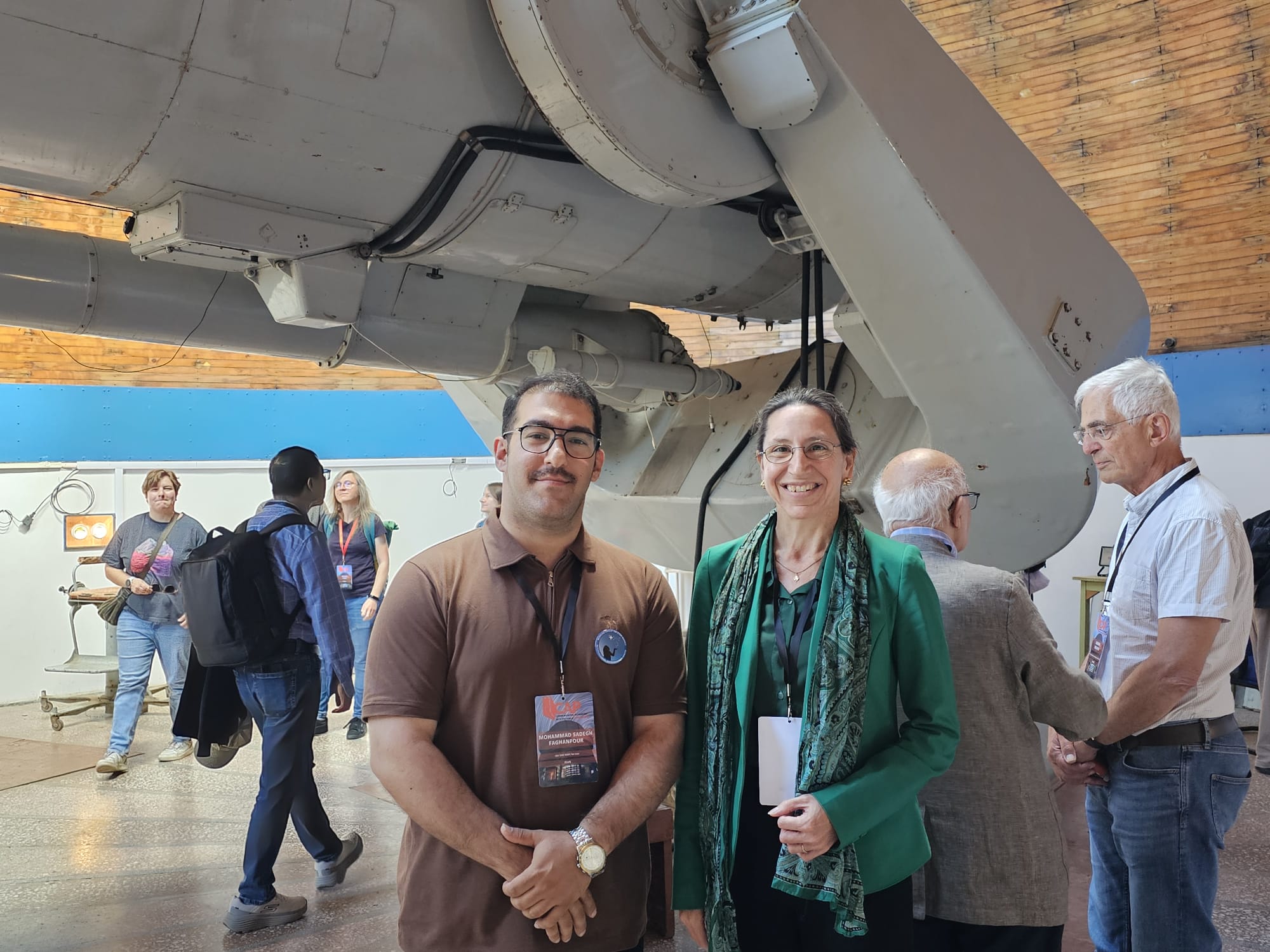
Our Social Media Agent, M. Sadegh Faghanpour (OAE Iran) presented on May 25 his usual work in the Office for Astronomy in Education in his country. He presented beautiful graphics he usually created for astronomy outreach and education.
WGSN Talk
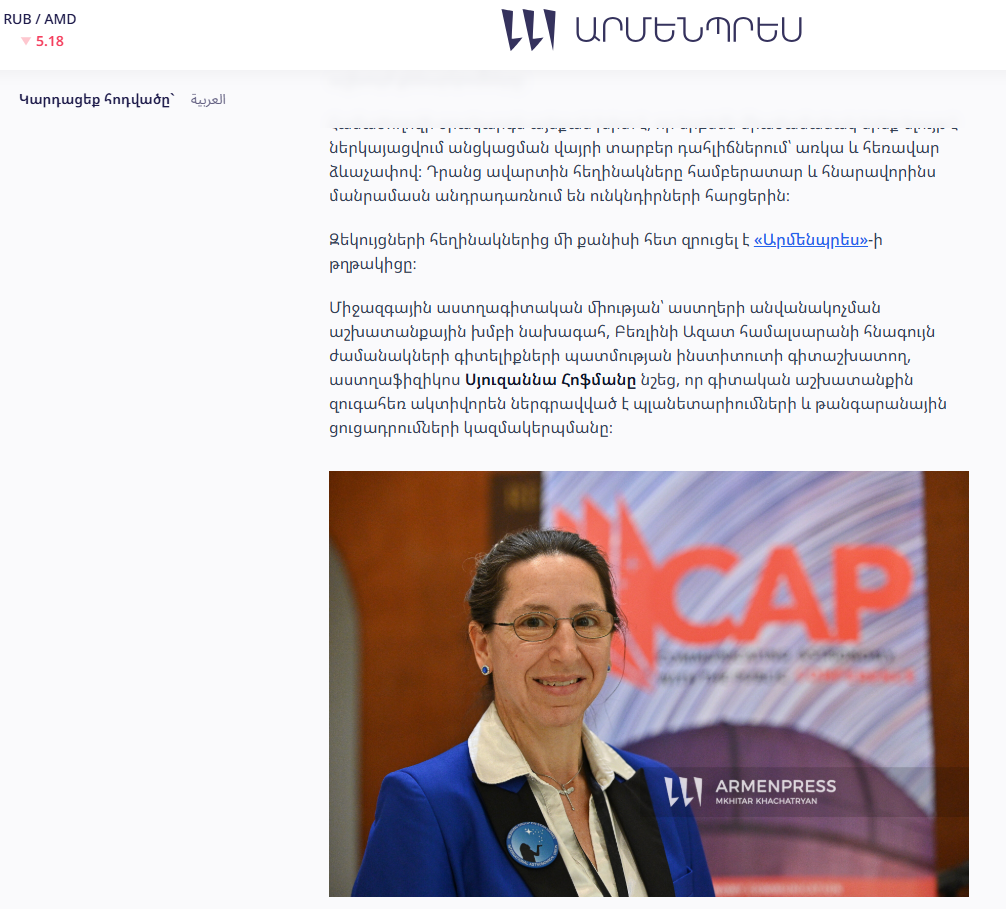
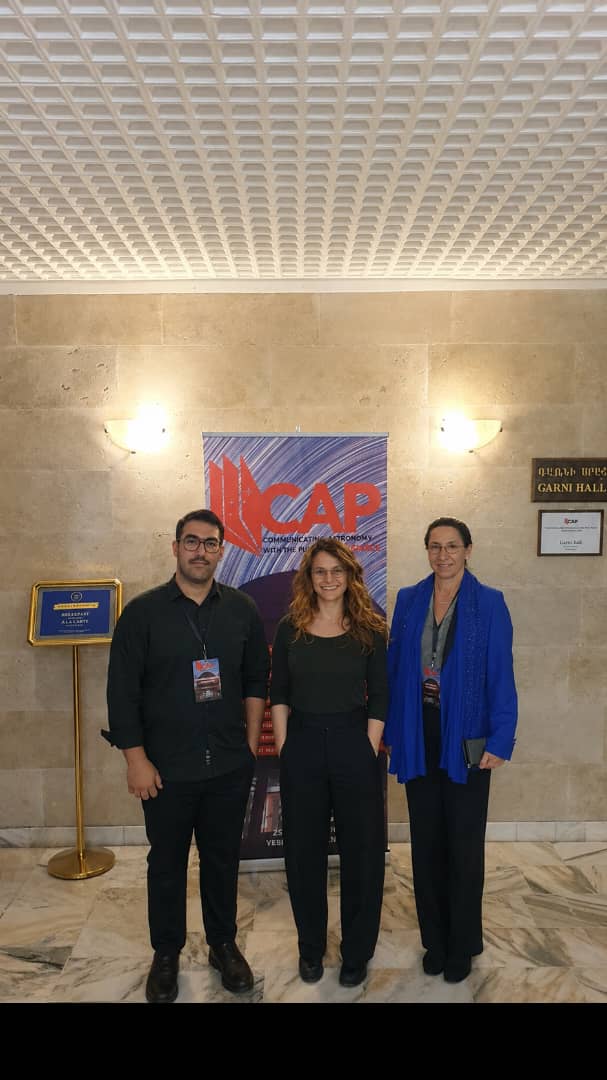
In general, the question of how stars are named officially is of considerable public interest. Hence, WGSN presented a talk at that conference – given by our chair and social media agent, Susanne M Hoffmann and M.Sadegh Faghanpour. The Armenian Press also interviewed us and published some key topics in an article during our stay.
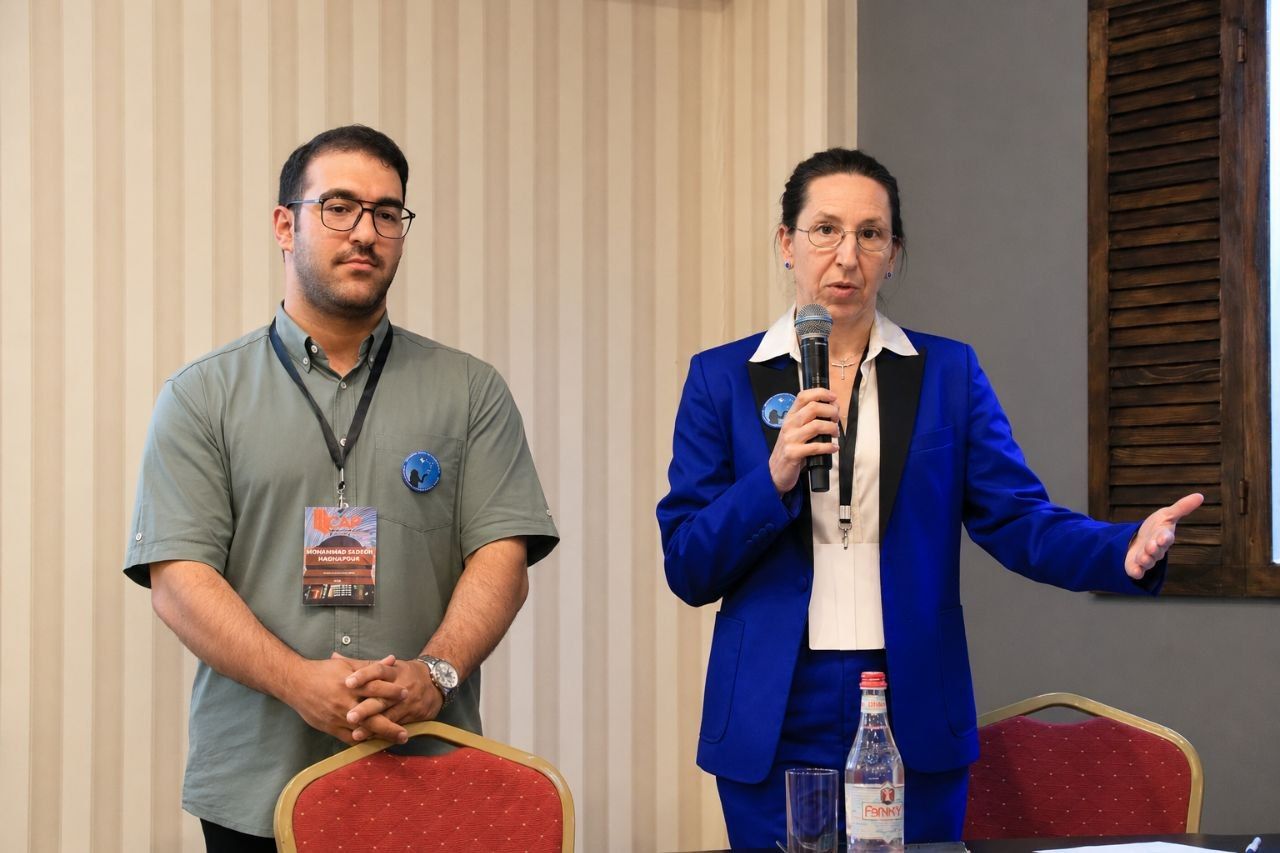
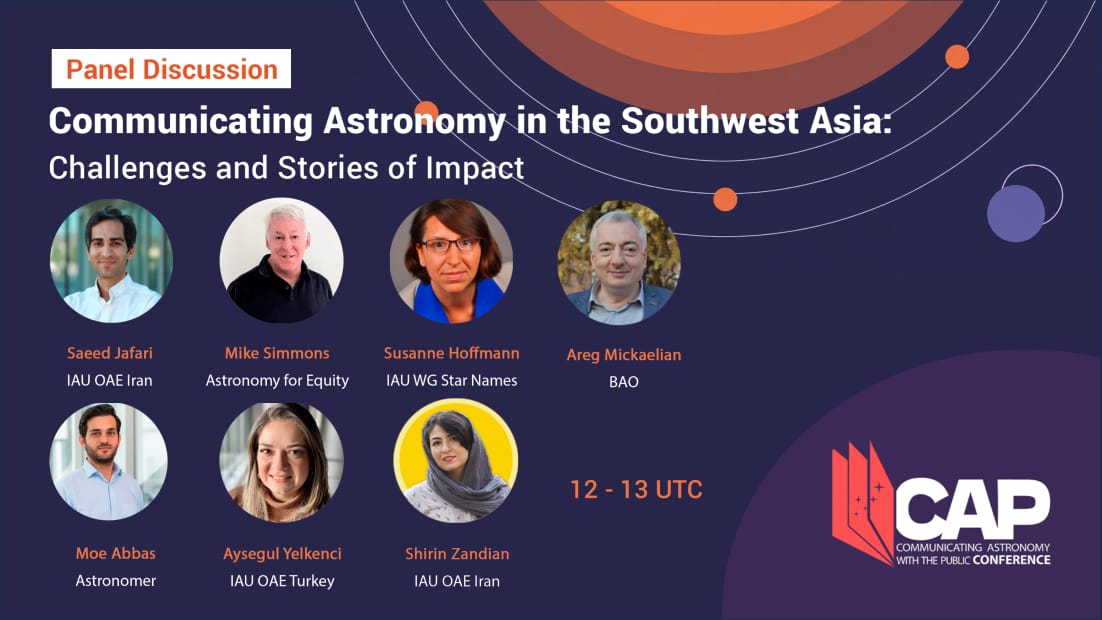
The chair of WGSN was also invited to a panel discussion on “Communicating Astronomy in the Southwest of Asia”. We posted on social media:
“Individual humans at personal encounter with a shared passion for the stars above can bridge cultural divides – even in countries at war.” This is one of the key take-aways from the panel discussion on May 26. The chair of WGSN discussed from her global perspective with communicators from West Asia (e.g. Turkey, Libanon, Iran, Armenia) about the special challenges of science communication in countries with frequent conflicts or even war. An important message is encouragement to break all communication down to individuals, as wars are between states.”
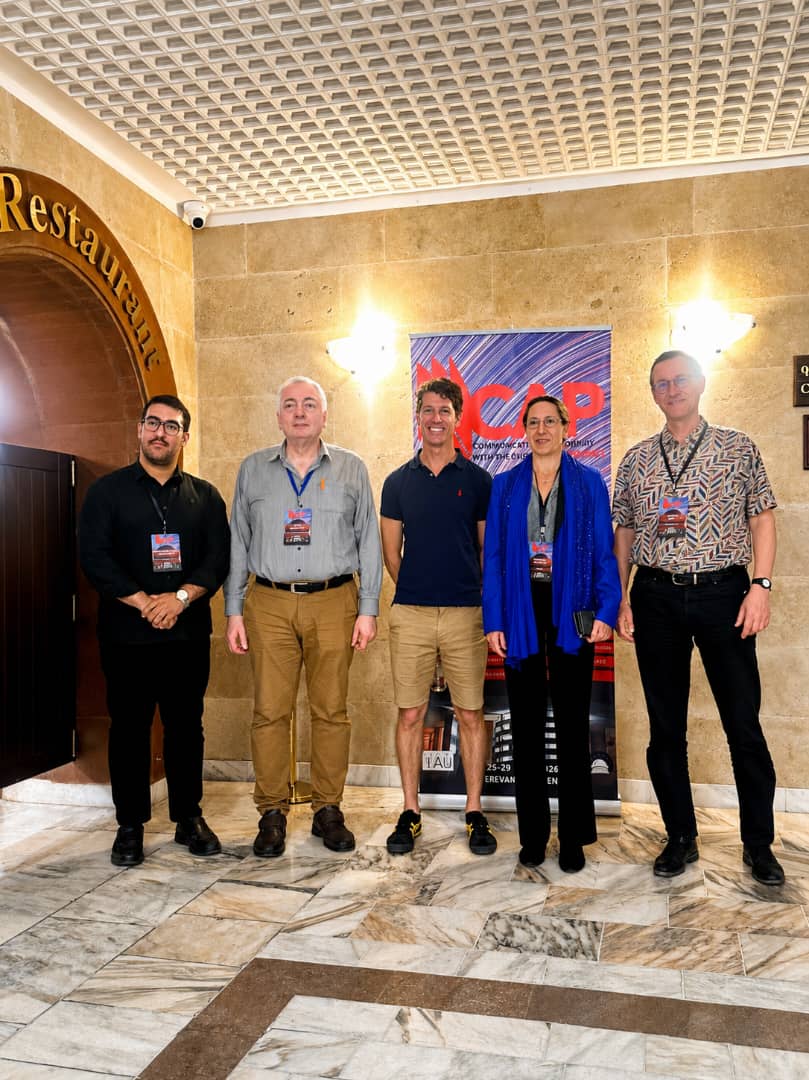
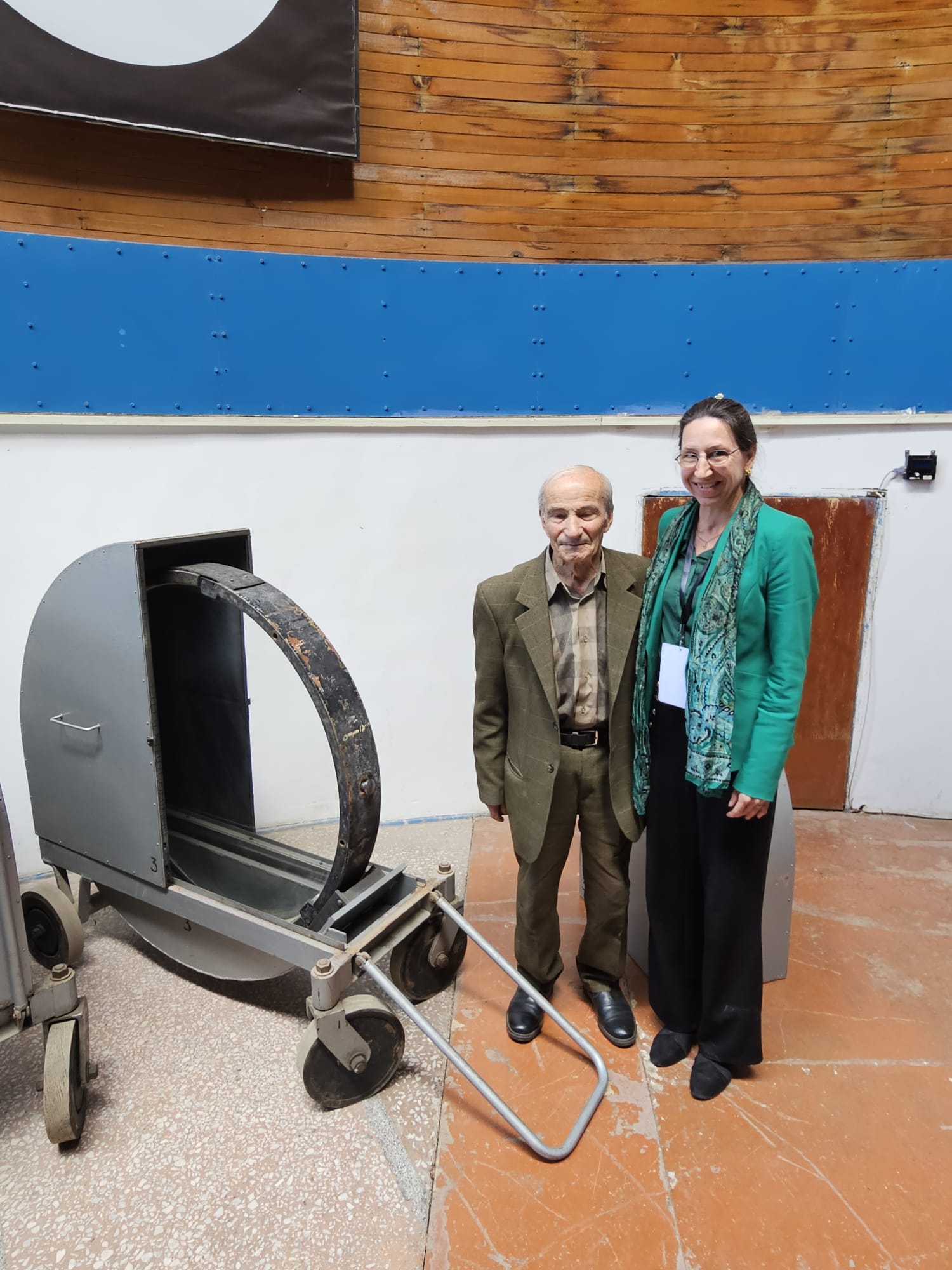
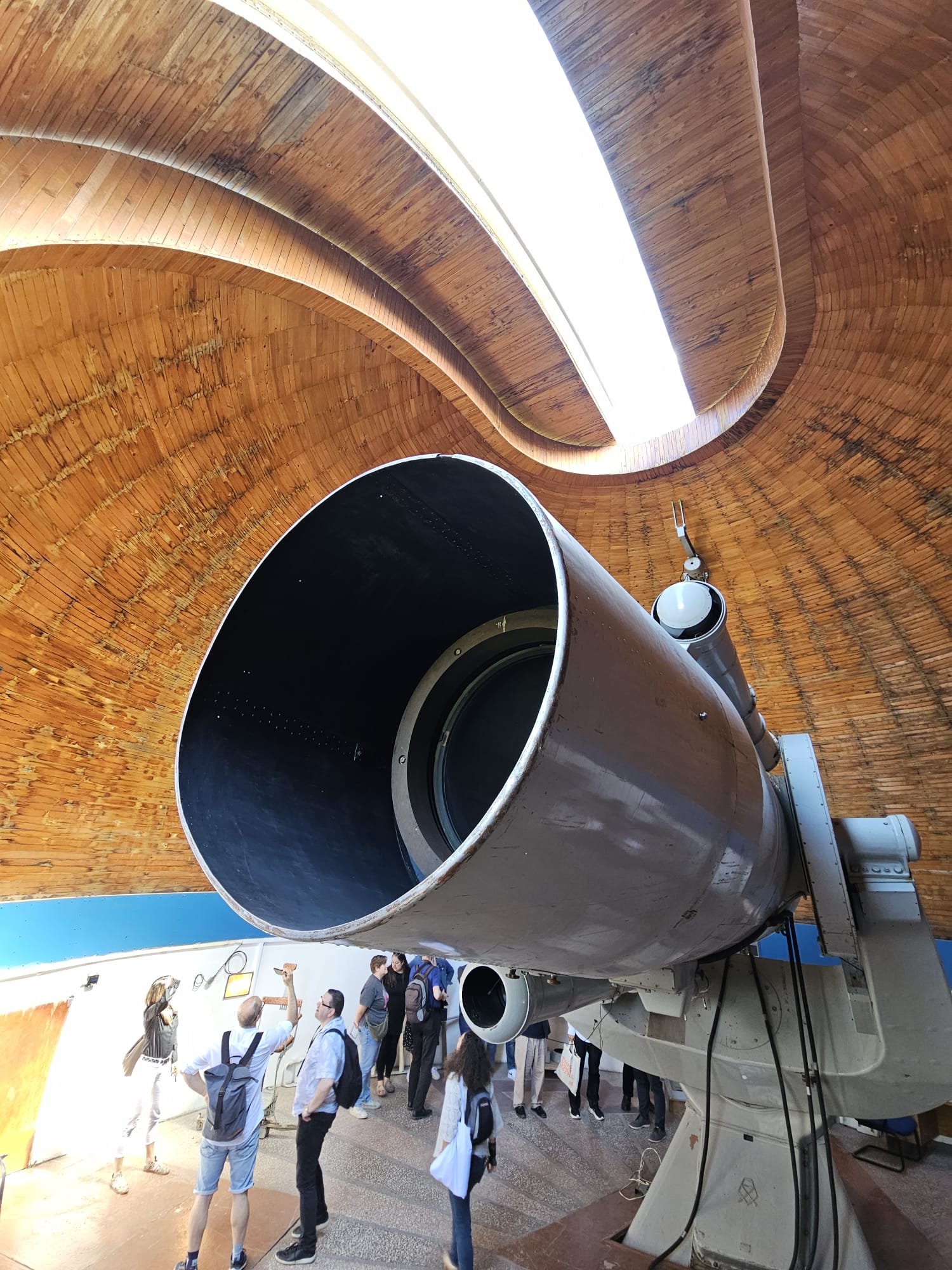
Of course, we also met with the director of the Byurakan observatory, the head of the IAU Office for Astronomy Outreach (OAO), Kelly Blumenthal, and a developer of Stellarium, Georg Zotti.
13 Responses
Informasi yang dibutuhkan banyak orang. Bookmark dulu untuk dibaca ulang.
Informasi yang dibutuhkan banyak orang. Bookmark dulu untuk dibaca ulang.
Artikel yang sangat bermanfaat, terima kasih sudah berbagi insight ini.
Howdy! Would you mind if I share your blog with my twitter group? There’s a lot of people that I think would really enjoy your content. Please let me know. Cheers
feel free
You are my breathing in, I possess few web logs and very sporadically run out from to brand : (.
Exactly what I was looking for, regards for putting up.
The next time I read a blog, I hope that it doesnt disappoint me as much as this one. I mean, I know it was my choice to read, but I actually thought youd have something interesting to say. All I hear is a bunch of whining about something that you could fix if you werent too busy looking for attention.
Its superb as your other posts : D, appreciate it for putting up.
I always was interested in this subject and still am, regards for posting.
https://continent-telecom.com/
thank you for sharing with us, I believe this website genuinely stands out : D.
The matchmaking in 2v2.io is quick and usually pairs you with evenly skilled opponents. a7508b9a.
Comments are closed.